

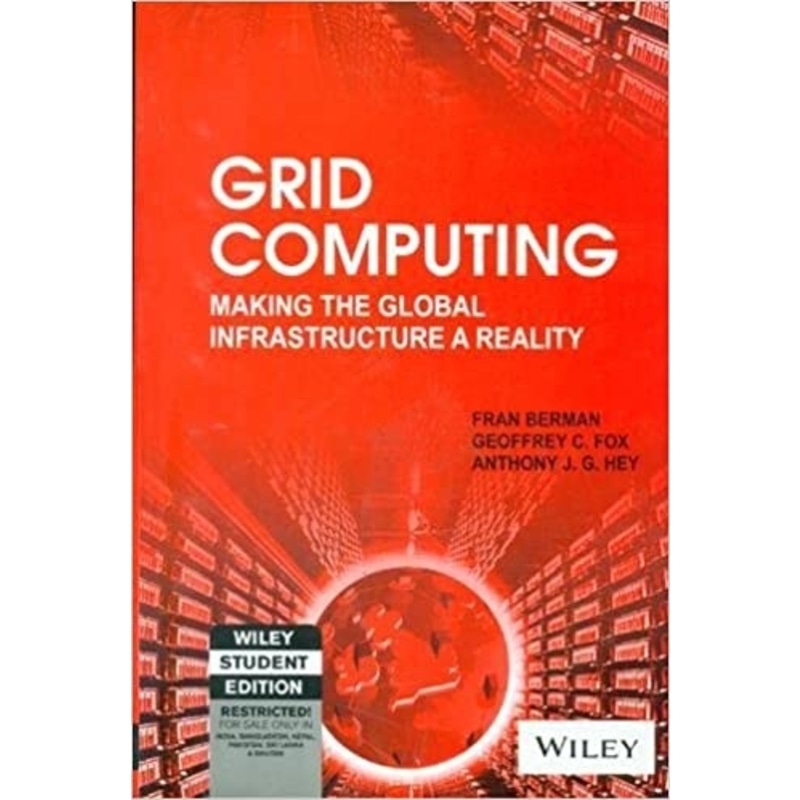
Grid Computing Making the Global Infrastructure a Reality
Rs.3,800.00
Additional Information
Product Description
Synopsis
Grid computing appears to be a promising trend for three reasons: (1) its ability to make more cost-effective use of a given amount of computer resources, (2) as a way to solve problems that cant be approached without an enormous amount of computing power, and (3) because it suggests that the resources of many computers can be cooperatively and perhaps synergistically harnessed and managed as a collaboration toward a common objective. A number of corporations, professional groups, university consortiums, and other groups have developed or are developing frameworks and software for managing grid computing projects. The European Community (EU) is sponsoring a project for a grid for high-energy physics, earth observation, and biology applications. In the United States, the National Technology Grid is prototyping a computational grid for infrastructure and an access grid for people.
Grid computing is applying the resources of many computers in a network to a single problem at the same time - usually to a scientific or technical problem that requires a great number of computer processing cycles or access to large amounts of data. Grid computing can be thought of as distributed and large-scale cluster computing and as a form of network-distributed parallel processing. It can be confined to the network of computer workstations within a corporation or it can be a public collaboration (in which case it is also sometimes known as a form of peer-to-peer computing).
- Paperback
- Publisher: WILEY INDIA; Edition: 1 (January 1, 2003)
- Language: English
- ISBN: 9788126527229
- Product dimensions: 22.9 x 15 x 3.9 cm
Have one to sell? Click Here